Miscarriages are always painful and heartbreaking experiences. When you have suffered a miscarriage, you are indeed left with many questions in your mind. For example, what’s the difference between a missed or a chemical or any other type of miscarriage? Knowing the facts may help you realize that nothing you had done ended in miscarriage. So, you may learn about the many types of miscarriages in the post below, as well as the physical recovery or emotions that each one entails.
Understanding Miscarriage
A miscarriage, sometimes known as a spontaneous abortion, is pregnancy loss before twenty weeks and affects about 15% to 20% of all conceptions. Miscarriages mainly occur in the first trimester and may also happen in the later trimesters.
Common Types of Miscarriage
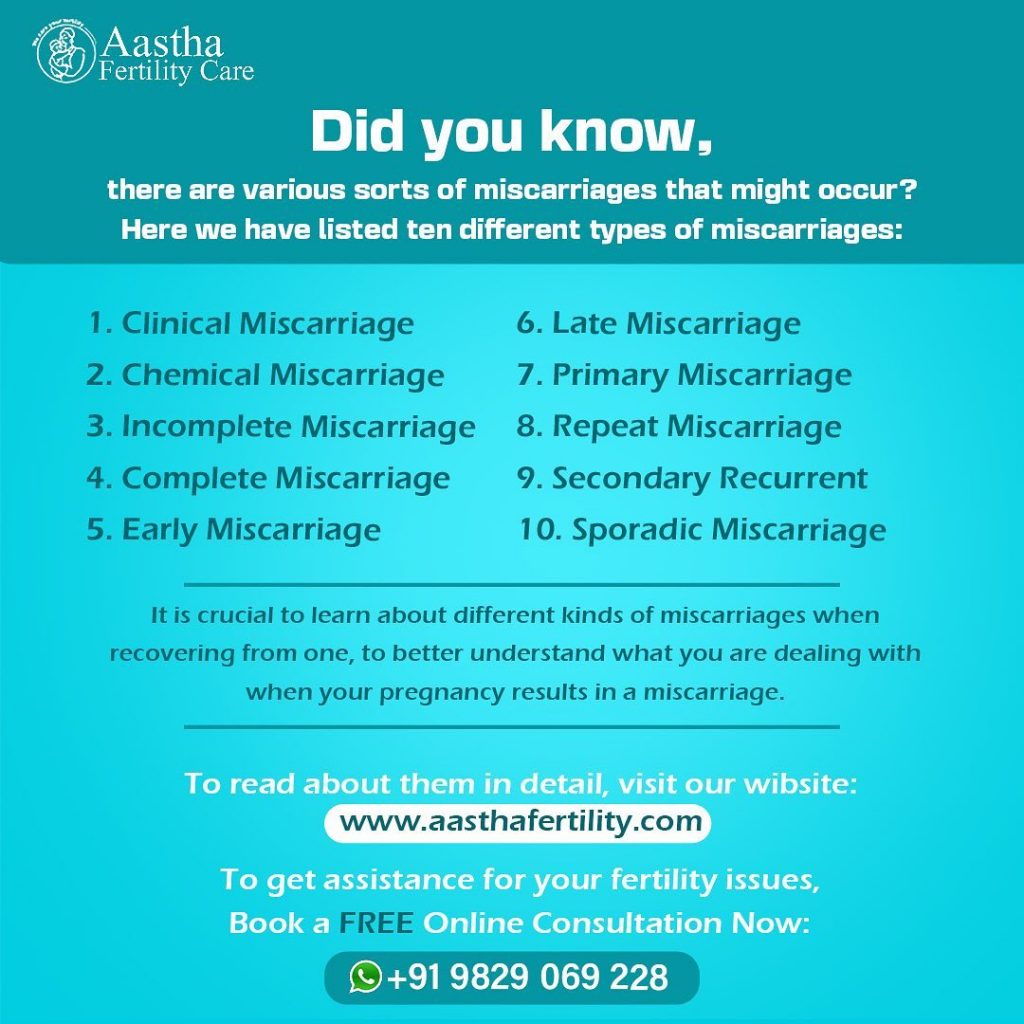
It is crucial to learn about different kinds of miscarriages when recovering from a miscarriage so that you better understand what you are dealing with when your pregnancy results in a miscarriage. Are you curious about the various sorts of miscarriages that might occur? Here we have listed ten different types of miscarriages that you can have.
Clinical Miscarriage
In a clinical miscarriage, clinical indicators of pregnancy are there in addition to a positive pregnancy test, including a visible fetal sac or a missed period while undergoing an ultrasound. Hence, it is any miscarriage that isn’t chemical.
Symptoms
Women might experience the following symptoms during a clinical miscarriage:
Early pregnancy symptoms (tenderness of the breast, nausea) vanish
Pain in abdomen
Causes
Causes that are linked with clinical miscarriage are:
Abnormal development of the uterus
Binge smoking
consuming illicit drugs
Hyperthyroidism
Severe diabetes
Treatment
Clinical miscarriage usually involves any of the following procedures (treatment):
Watchful waiting.
Medical treatment (using Cytotec drug).
Surgical treatment (Dilation and Curettage (D&C) prevent heavy bleeding).
Chemical Miscarriage
The distinction between a clinical and a chemical miscarriage is much more than a technique of expressing if the loss occurred early or late. The egg is fertilized in a chemical miscarriage that prompts the body to generate HCG, the pregnancy hormone. However, because the fertilized egg doesn’t ever implant, no clinical evidence of miscarriages, such as a fetus or a sac, exists. These short pregnancies usually end before you miss a menstrual period.
Symptoms
Women might experience the following symptoms during Chemical Miscarriage:
Periods arrive late by a week
A pregnancy test shows a positive result, but your period comes shortly after.
Menstrual cramps are more intense, and your period is heavier than usual.
Low HCG levels
Cramping
Causes
Causes that are linked with chemical miscarriage are:
Abnormal uterine
Implantation happens outside the uterus
Infections (like syphilis or chlamydia)
Hormone imbalances
Treatment
Chemical miscarriage usually involves any of the following procedures (treatment):
Physical needs should be taken care of after a chemical miscarriage.
Emotional needs (anger, jealousy, guilt) should be removed after a chemical miscarriage.
Labour with medication (pain-relief medication or intravenous injections is taken).
Surgical treatment (Dilation and Curettage (D&C) prevent heavy bleeding).
Incomplete Miscarriage
A miscarriage is incomplete means your body can’t evacuate the fetus itself. In a few circumstances, a minor surgery known as a D&C could be required to verify that everything is expelled before attempting to conceive again.
Symptoms
Women might experience the following symptoms during an incomplete miscarriage:
Heavy vaginal bleeding
Pain in abdomen
Cramping
Some women might encounter excruciating pain.
Early pregnancy symptoms vanishes
Causes
Causes that are linked with incomplete miscarriage are:
Abnormal shape of uterine
Weaken immune system
Inborn heart disease
Improper implantation
Bad lifestyle (binging alcohol, smoking, weed)
Hormonal imbalances
Past miscarriage
Treatment
Incomplete miscarriage usually involves any of the following procedures (treatment):
Watchful waiting: In this treatment, yourIVF specialist DR Namita Kotia waits to see if the product of conception naturally passes through the body.
Dilation and Curettage (D&C) surgical procedure prevents heavy bleeding.
The medication Cytotec (misoprostol) is administered by mouth or vaginally.
Complete Miscarriage
The main distinction between an incomplete and a complete miscarriage is whether your body begins and completes the miscarriage. Bleeding happens after a complete miscarriage, and it occurs naturally. However, during a complete miscarriage, every fetal tissue is removed from the uterus; thus, you might pass huge clots.
Symptoms
Women might experience the following symptoms during a complete miscarriage:
Heavy vaginal bleeding
Severe pain in the abdomen
Cramping
Passage of pregnancy tissues
Causes
Causes that are linked with complete miscarriage are:
Abnormal development of the placenta
Abnormal development of the fetus
Weaken of cervix
Underlying health conditions (heart disease, kidney disease, HIV, thyroid)
Bad lifestyle (binging alcohol, smoking, weed)
Hormonal imbalances (PCOS)
Avoiding medications like (retinoids, NSAIDs, misoprostol and antidepressant)
Treatment
No further treatment is usually required if the miscarriage is complete (all fetal tissue has been expelled from your uterus).
Your IVF specialist DR Namita Kotia will conduct an ultrasound test to make sure there are no leftover tissues.
Early Miscarriage
A miscarriage that occurs before the 13th week of pregnancy is an early miscarriage. However, if it occurs early in the pregnancy, your healing could be swift, and you can initiate trying again immediately after consulting with your doctor. Uterine structural issues can also cause early miscarriage.
Symptoms
Women might experience the following symptoms during an early miscarriage:
Light vaginal bleeding
Severe pain in the abdomen
Cramping
Passage of pregnancy tissues through the vagina
Brown discharge (old blood stored in the uterus)
Spotting
Dizziness
Early pregnancy symptoms (tenderness of the breast, nausea) vanish
Pain in abdomen
Causes
Causes that are linked with early miscarriage are:
Abnormal development of the uterus
Binge smoking
consuming illicit drugs
Hyperthyroidism
Severe diabetes
Treatment
Early miscarriage usually involves any of the following procedures (treatment):
Watchful waiting.
Medical treatment (using Cytotec drug).
Surgical treatment (Dilation and Curettage (D&C) prevent heavy bleeding).
Late Miscarriage
A miscarriage usually happens from 14 to 24 weeks and is a late miscarriage and is generally referred to as stillbirth. Late miscarriages are generally associated with longer healing times, both emotionally and physically, and substantially heavy bleeding. It also requires pelvic rest for a few months before trying to conceive again.
Symptoms
Women might experience the following symptoms during a late miscarriage:
Vaginal bleeding
Severe pain in the abdomen
Cramping
Spotting
No movement of the fetus
Unexplained tissue passing through the vagina
Causes
Causes that are linked with late miscarriage are:
Cervical insufficiency
Congenital conditions
Abruption of placenta
Infections (chlamydia and viral vaginitis)
Traumas in abdomen
Consuming illicit drugs and alcohol
Medical conditions (PCOS, thyroid, blood pressure)
Development of blood clots through thrombophilia
Treatment
Late miscarriage usually involves any of the following procedures (treatment):
Labour with medication (pain-relief medication or intravenous injections is taken).
Surgical treatment (Dilation and Curettage (D&C) prevent heavy bleeding).
Steer clear of intercourse to avoid cramping and bleeding.
Physical needs should be taken care of after a late miscarriage.
Emotional needs (anger, jealousy, guilt) should be taken off after a late miscarriage.
Primary Miscarriage
Primary miscarriage is when it is in your initial pregnancy. Just because you have had a miscarriage in your initial pregnancy doesn’t mean you don’t have another chance. You can try conceiving again.
Symptoms
Women might experience the following symptoms during primary miscarriage:
Vaginal bleeding
Pain in the abdomen
Cramping
Spotting
Causes
Causes that are linked with primary miscarriage are:
Clotting disorder (like lupus anticoagulant)
Genetics
Infections
Anatomic problems (defect in the uterus)
Treatment
Maintain a healthy diet.
Avoid alcohol, recreational drugs, and cigarette smoking.
Cut down your caffeine consumption to 200 mg per day
Exercise regularly.
Eliminate the use of illicit drugs and alcohol
Repeat Miscarriage
It is considered a repeat miscarriage when you have had more than one miscarriage. It usually occurs within the initial trimester and is mostly caused due to chromosomal or genetic disorders in the embryo, with chromosomal abnormality accounting for about 50% to 80% of spontaneous losses.
Symptoms
Women might experience the following symptoms during repeat miscarriage:
Vaginal bleeding
Pain in the abdomen
Cramping
Spotting
Severe back pain
Discharge of mucus (white & pink)
Causes
Causes that are linked with repeat miscarriage are:
The last and most crucial cause is back-to-back miscarriages
Abnormal chromosomes (known as translocation) in eggs
Treatment
Frequent blood tests to check complications.
Investigating the shape of the uterine to recommend surgery if recommended.
Medical treatment (using Cytotec drug).
Surgical treatment (Dilation and Curettage (D&C) prevent heavy bleeding).
Secondary Recurrent Miscarriage
It is regarded as a secondary miscarriage when you have already given birth to a baby preceding this miscarriage. However, it is not a repeat miscarriage. Approximately 15 per cent of secondary recurrent miscarriages occur due to uterine structural issues. Uterus abnormalities are usually with birth, such as septate, when the uterus is divided by a wall, double uterus, or a few less prevalent congenital issues.
Symptoms
Women might experience the following symptoms during secondary recurrent miscarriage:
Vaginal bleeding
Pain in the abdomen
Cramping
Spotting
Severe back pain
Discharge of mucus (white & pink)
Causes
Causes that are linked with secondary recurrent miscarriage are:
Surgical treatment (Dilation and Curettage (D&C) prevent heavy bleeding).
Sporadic Miscarriage
A sporadic miscarriage is a term used to describe the first miscarriage, irrespective of if you have had a child before or not. It is among the most prevalent complications of early pregnancy. Two or three pregnancy losses in a row is a rare occurrence that is treated as a distinguished disease or disorder. Sporadic miscarriages may be considered due to defective embryos failing to reach viability.
Symptoms
Women might experience the following symptoms during a sporadic miscarriage:
Heavy vaginal bleeding
Severe pain in the abdomen
Cramping
Passage of pregnancy tissues
Causes
Causes that are linked with sporadic miscarriage are:
Abnormal development of the placenta
Abnormal development of the fetus
Weaken of cervix
Underlying health conditions (heart disease, kidney disease, HIV, thyroid)
Bad lifestyle (binging alcohol, smoking, weed)
Hormonal imbalances (PCOS)
Avoiding medications like (retinoids, NSAIDs, misoprostol and antidepressant)
Treatment
Sporadic Miscarriage usually involves any of the following procedures (treatment):
Watchful waiting.
Medical treatment (using Cytotec drug).
Surgical treatment (Dilation and Curettage (D&C) prevent heavy bleeding).
Which Week is Vulnerable for Miscarriage– Risks and Statistics
The following pointers show the general miscarriage risk by week:
Week 3-4
A woman’s implantation usually occurs three weeks following her last period.
By week 4, a home pregnancy test may show a positive result.
It is estimated that 50–75% of pregnancies end before positive pregnancy test results.
In most cases, women do not know that they are pregnant, although a few may suspect they were by experiencing symptoms of pregnancy loss.
Week 5
At this stage, the rate of miscarriage varies. A Journal published in 2013 found that 21.3% of pregnant women lose their pregnancy after week 5.
Week 6-7
According to the same study mentioned above, the rate of miscarriages drops to 5% after week 6.
Week 8-13
As per a study published in 2013, during the second half of the first trimester, miscarriages occur at a rate of 2–4%.
Week 14-20
There is less than a 1% chance of miscarriage between weeks 14 and 20.
If a miscarriage or pregnancy loss occurs within week 20 of pregnancy, it is considered a stillbirth which may result in labor (pain-relief medication or intravenous injections are taken).
Why do we need to talk about losing a baby?
Despite modern medical advances, miscarriage and stillbirth are taboo topics worldwide, associated with stigma and shame.
In the Lancet journal, 23 million stillbirths and miscarriages occur annually.
Remember to be kind to yourself since you have been through a great deal of grief and need time to recover physically and mentally.
If you struggle to manage your
Guilt
Stress
Anxiety
Anger or
Trying to coping up with the days after the death of your child
Not able to express your emotions
Having physical reactions like palpitations, butterflies in the stomach, pain in the chest, cold and insomnia.
Please, it is recommended to visit your IVF specialist or talk to your friends, loved ones, and family members for support during this difficult time.
At Aastha Fertility, our goal is to help our clients cope with their grief, anger, and depression to get them emotionally and physically ready to experience parenthood again.
Besides, there are other types of miscarriages, such as missed miscarriage, vanishing twin miscarriage, blighted ovum miscarriage, etc. However, there is a difference between missed abortion and blighted ovum. A delayed missed, or early embryo loss is referred to as blighted ovum miscarriage when an ultrasound scan displays a pregnancy sac without anything inside. It usually occurs when the fertilized eggs are not normally developed, resulting in the growth of a sac without a baby. Many causes are there that cause miscarriage, but the most prevalent is miscarriage because of blood type.
Dr. Namita Kotia (IVF specialist in Jaipur) attained her Master’s in Obstetrics and Gynecology from S.N. Medical College, Jodhpur affiliated to University of Rajasthan in 1997. She has more than 10 years experience in field of Assisted Reproductive Technology (ART).Presently at Aastha Fertility Care Dr. Namita along with her team is providing complete infertility work up and treatment options under one roof. Her aim is to provide proper guidance and treatment to Infertile couples at AFFORDABLE RATES.She is life member of Indian Academy of Human Reproduction (IAHR), Indian Society for Assisted Reproduction (ISAR), Federation of Obstetrics and Gynecology Society of India (FOGSI) and Jaipur Obstetrics Gynecology Society (JOGS). She has a number of publications in various journals and presentations at state and National level conferences to her credit.Dr. Namita is also recipient of best paper presentation viz “Diagnosis of Congenital Mullerian anomalies by three dimensional Transvaginal Sonography” awarded at “Kishori” Conference in Jodhpur (2000).






Leave a comment